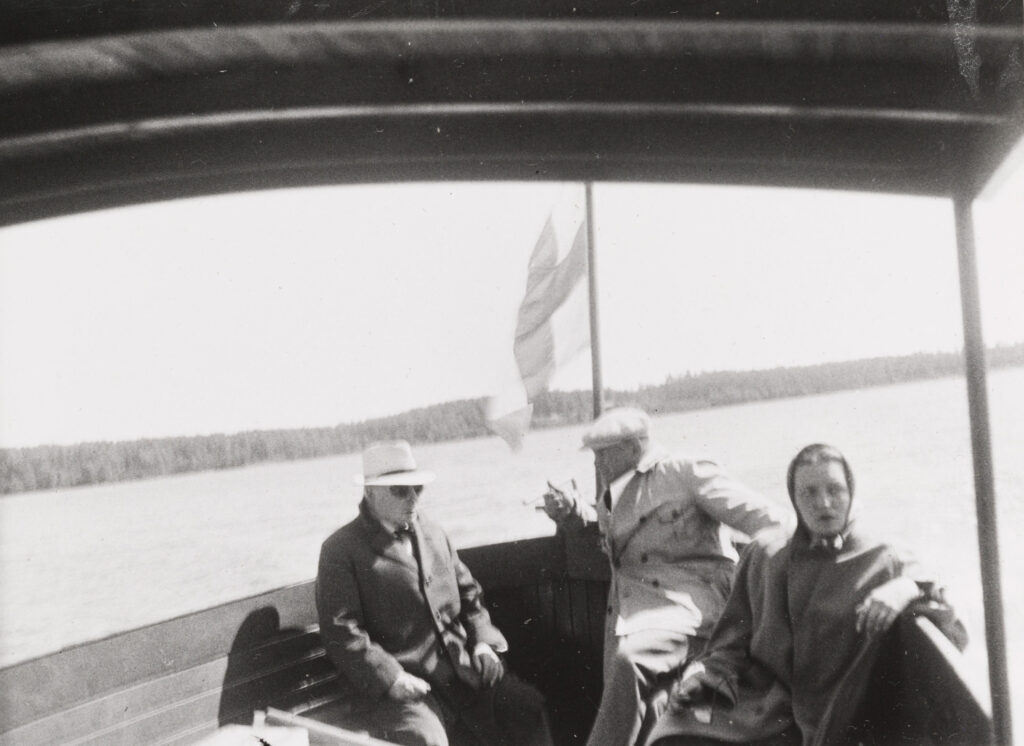
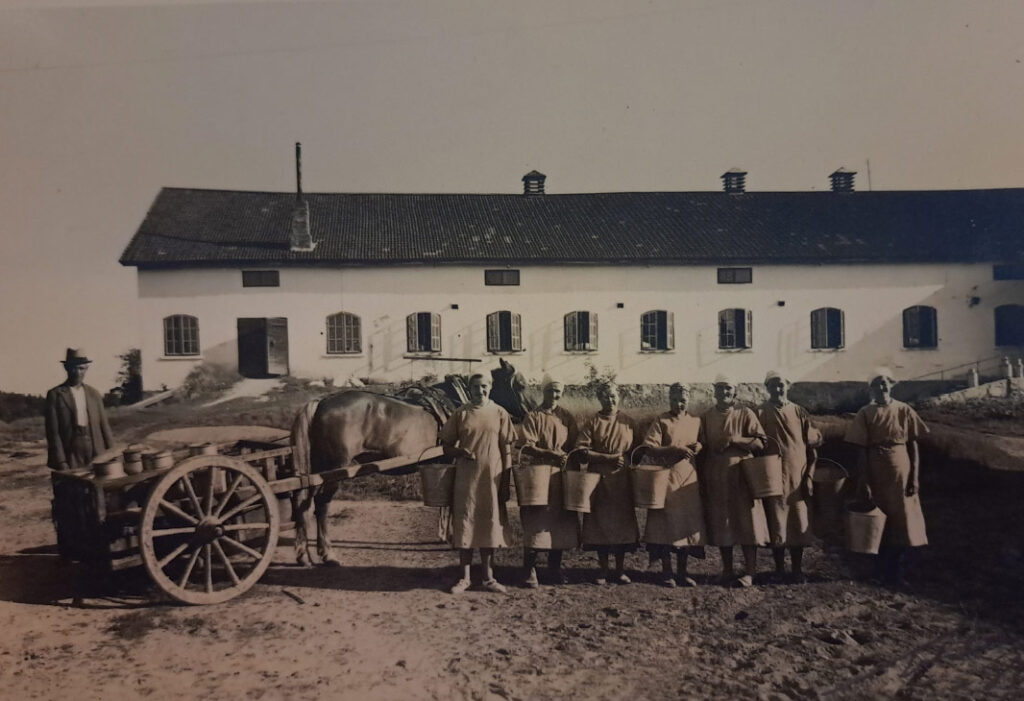
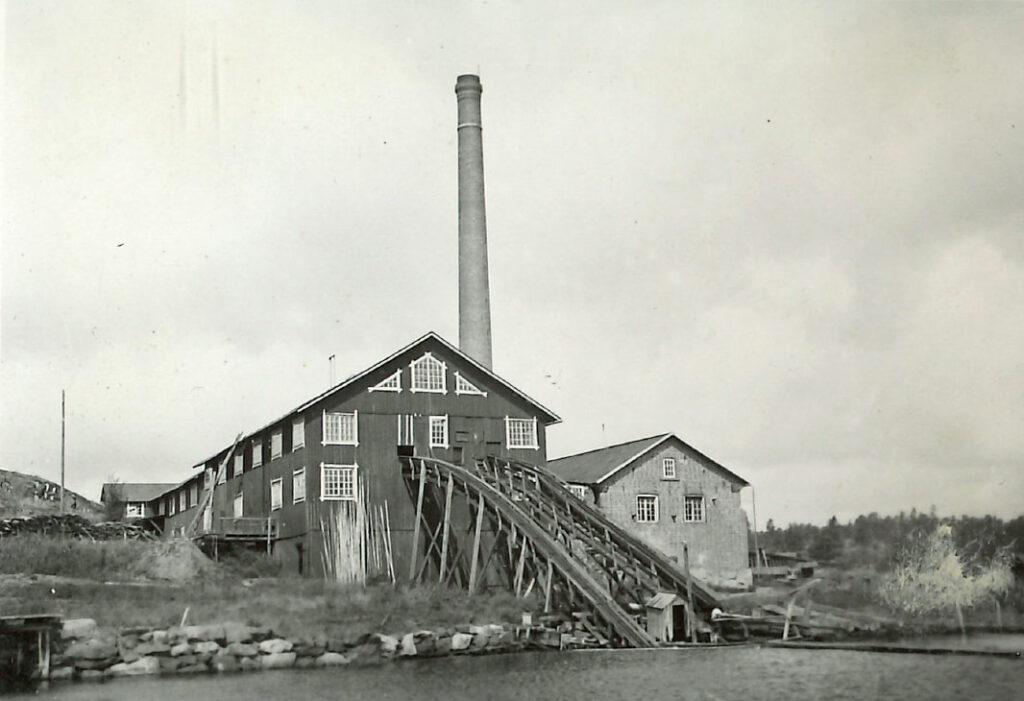
A few years before acquiring Söderlångvik, Amos had already purchased the estates of Tolfsnäs on Kimitoön (1922) and Attu near Pargas (1926). He saw them as opportunities to engage in industrial activities. The estates encompassed agriculture, forestry and livestock farming, and Attu was also known for its sawmill operations. After the war, Amos was criticised for converting parts of his land around Söderlångvik into apple orchards to avoid compulsory purchase and the allocation of land to evacuated Karelian families, although several hundred hectares of his land around Attu were expropriated. Amos also employed evacuees, and had already supported a voluntary resettlement program on Kimitoön, as well as small-scale farming opportunities for the impoverished population, after the end of World War I.