
Sustainability
We are Sustainable Travel Finland certified!
Söderlångvik Manor has been awarded the Sustainable Travel Finland (STF) label. The certification demonstrates our long-term commitment to responsible and sustainable tourism.
Read more about the Sustainable Travel Finland programme here. (in Finnsih)
Environmental responsibility and sustainability are an integral part of Söderlångvik Manor’s operations. This is reflected in our forestry, apple cultivation, tourism services, and engagement with the surrounding community.

Green Key Sustainability Plan
Our Green Key certificate was our first step on our path towards the STF – certificate.
The Park and the Manor
The buildings at Söderlångvik are mainly heated using wood chips from its own forests. The manor also has solar panels with a capacity of 93 kWp.
Twigs, branches, and leaves from the park are collected and brought to the outer areas, where they serve as insect habitats as they decompose. To promote biodiversity, the grass in the park is managed so that different plants and herbs have space to grow.
Apple Orchard
The apple orchards follow the principles of integrated production (IPM) and are certified according to Finland’s Quality Farm guidelines. These guidelines are shared standards for Finnish horticultural production, ensuring that products are safe, that environmental impact is minimized, and that workers have good working conditions.
Electric shears are used for pruning, and electric golf carts are used in both the park and the orchards.
Sustainability Projects
Restoration of Stormossen at Långsidan
As part of Söderlångvik Manor’s work to enhance biodiversity, the Stormossen mire in Dragsfjärd has been restored. According to old aerial photographs, the approximately eight-hectare area was still an open peatland in the 1950s. In the 1980s, ditches 60–120 cm deep were dug, which largely dried out the area. Scots pine and occasional birch gradually established themselves, and the peat layer diminished.
Before restoration, the old ditches were still draining water from the area. However, the impact of the drainage had not been strong enough to significantly boost tree growth. It is assumed that the peatland remained largely untouched after the drainage. Within the framework of the Helmi Habitats Programme, a restoration plan for Stormossen was developed. A large part of the tree stand was removed, and the ditches were blocked at the end of 2025. The main ditch was filled in at five-metre intervals using branches and material from the ditch edges.
- It will take several decades for the peat layers to recover. As a result of blocking the ditches, the water level is expected to rise by approximately half a metre, explains Roosa Kemppi, a nature conservation expert at the Regional Centre for Economic Development in Southwest Finland.
The moss species of Stormossen will be inventoried during the coming summer. The area will then be surveyed at intervals of a few years to monitor which plant species return. If the water level does not rise sufficiently from the current measures, smaller drainage ditches will also be blocked.
- Stunted pine trees are typical for this type of peatland, but removing the dominant tree layer was important, as trees also absorb water.
The Helmi Habitats Programme is a joint initiative of the Ministry of Agriculture and Forestry and the Ministry of the Environment. Restoration and management measures are targeted to maximise their effectiveness for biodiversity. Participation in the programme is always voluntary for landowners.
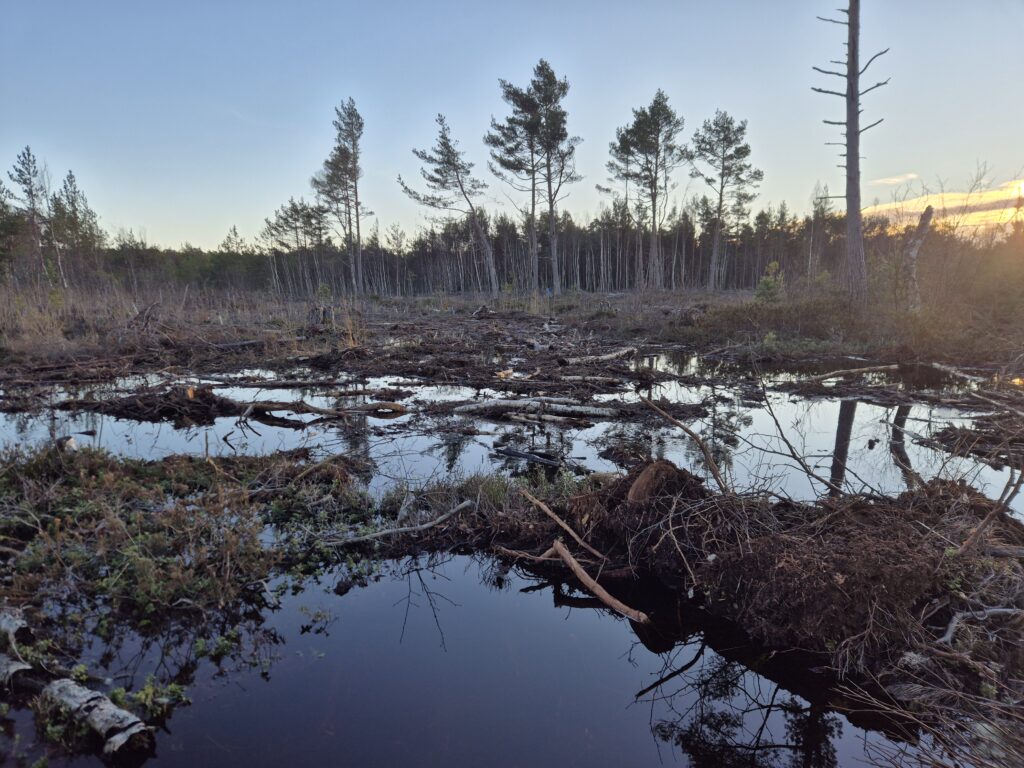
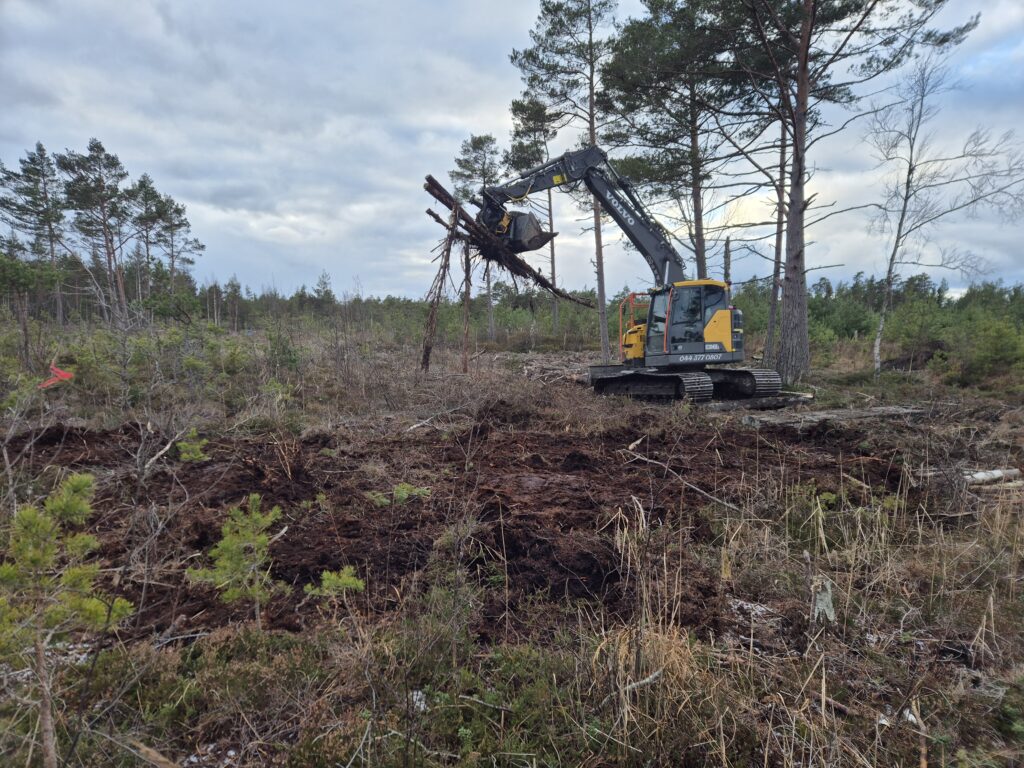
Photo: Siv Vesterlund-Karlsson
Restoration of Söderbyträsk
Söderbyträsk will be restored during 2026 in cooperation with the From Forests to the Sea project. This project is a collaboration between Valonia / the Regional Council of Southwest Finland, the Baltic Sea Action Group, the Municipality of Kimitoön, and Söderlångvik Manor, aiming to strengthen water protection in forestry within the Archipelago Sea catchment area. The project promotes water protection in forestry across Southwest Finland in a broad, knowledge-based way and reduces the environmental load on waterways.
The approximately 5-hectare area was drained after the 1950s through ditching. Before the drainage and blasting, there was a small pond in the area.
Coniferous trees along the outer edges of the site have been removed during the winter to improve visibility. After the bird nesting season, the ditch will be blocked, causing the water level in the area to rise. In addition to improving water quality, the restoration will also benefit biodiversity. For at least the duration of the two-year project, water quality will be monitored both at the inflow to and the outflow from the wetland.
Within the From Forests to the Sea project, training events will be arranged for both forest owners and forestry professionals. Söderbyträsk will serve as an example of restoration and water protection measures.
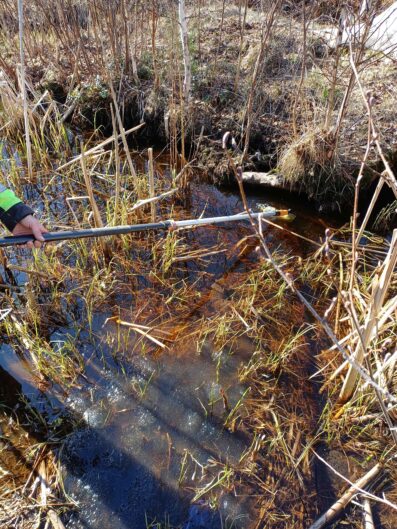
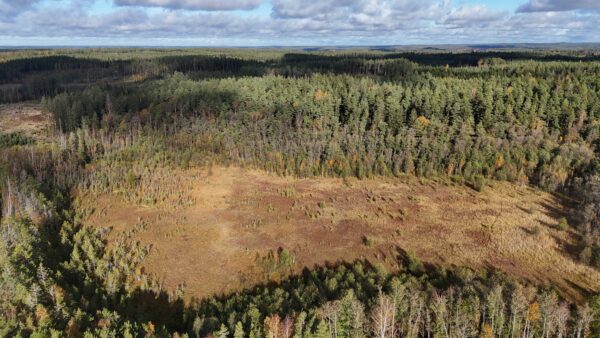
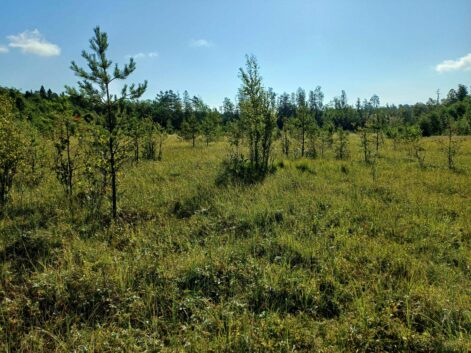
Photo: Mats Nurmio
Söderlångvik’s Pike Wetland
Söderlångvik’s pike wetland serves as a nature-based solution that enhances biodiversity along the coast. The constructed wetland in the shoreline zone creates new spawning grounds for pike and provides a sheltered nursery habitat for young fish.
The area also functions as a learning environment, increasing knowledge about the effects of nature-based solutions and the importance of aquatic ecosystems. The planning, implementation, and monitoring of Söderlångvik’s pike wetland are carried out by Turku University of Applied Sciences as part of the Supported by Nature project, in cooperation with the landowner. Around the wetland, there are four information boards where you can learn more about its function and the life it supports.
Construction of wetlands
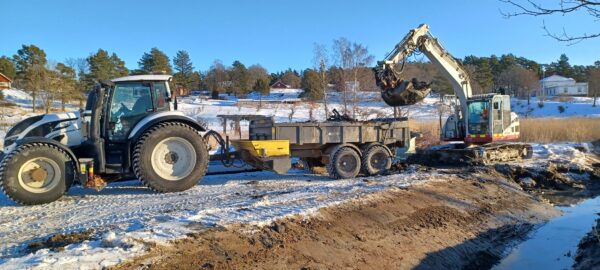
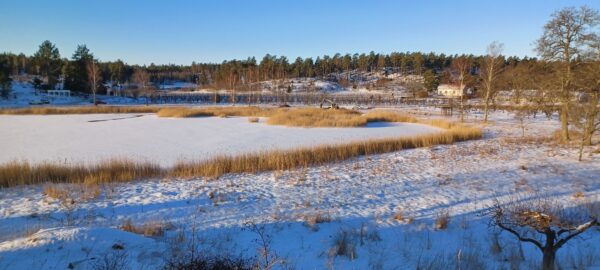
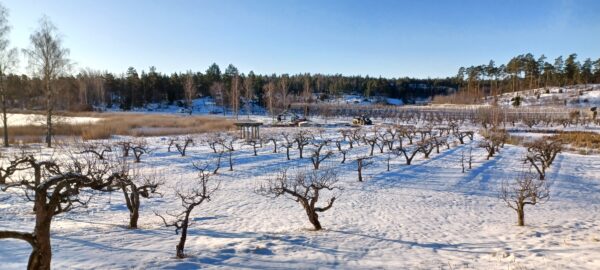
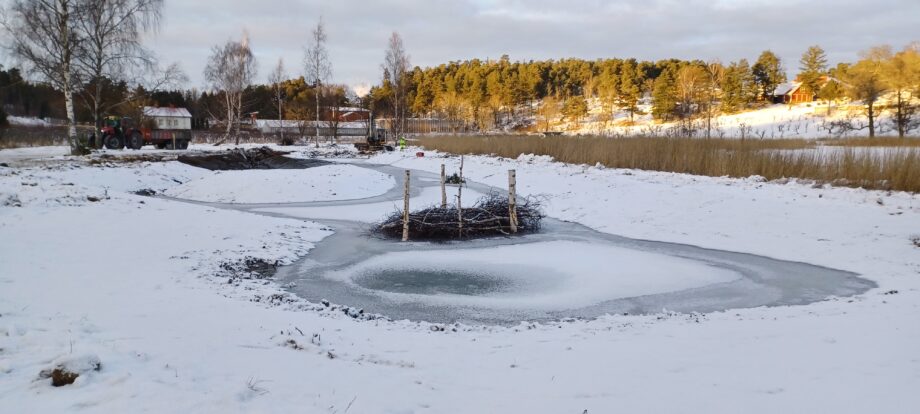
Photo: Turun AMK