
Art Exhibitions
Lassie Suddenly Burst Out Laughing – Collections of the OP Pohjola Art Foundation
1 May – 30 September and 14 November – 16 December 2026
On the first of May, an exhibition presenting the OP Pohjola Art Foundation Collection will open at Söderlångvik Museum on Kimito Island. The show takes its name from a charming miniature sculpture titled Lassie Suddenly Burst OutLaughing (1982) by the artist Erkki Mykrä.

OP Pohjola Art Foundation, photo: Stella Ojala
Occupying five rooms on the ground floor of the museum, the exhibition encompasses paintings, sculptures and prints by prominent Finnish artists. The earliest work included is Unto Koistinen’s painting Hannu from 1957, the most recent is Heimo Suntio’s installation The Draughtsman from 2016. The exhibition features altogether about 60 works within that span of time, most of them dating from the 1980s and 1990s.
The exhibition brings together a carefully curated selection of works from the OP Pohjola collection that are compelling both artistically and in terms of their content. The installation of the show is designed to reflect the character and proportions of the museum galleries. The spacious drawing room is devoted to abstract art, which has played a significant role in Finnish modernism, with famous names including Matti Kujasalo, Juhana Blomstedt, Mari Rantanen and Kain Tapper. The large dining room presents a selection of larger artworks, including Kaj Stenvall’s early depiction of workers Dismissal, Esko Tirronen’s In the Wind, Raimo Aarras’s luminous Beach, Paul Osipow’s Ruins, Grez sur Loing, and Ann Sundholm’s exuberant print series on animal patterning. The atmosphere in the smaller rooms is more intimate, with works by Marjukka Paunila, Katarina Reuter, Markku Keränen and Marjatta Hanhijoki, among others. Sculptures have also been placed in each room, by artists including Minna Tuominen, Miina Äkkijyrkkä, Laila Pullinen, Kari Huhtamo and Pauno Pohjolainen.
The OP Pohjola Art Foundation and the Amos Anderson Fund share close ties, and both are members, with their respective collections, of the Association of Finnish Fine Arts Foundations. The exhibition at Söderlångvik Museum offers the public an opportunity to admire art that is rarely shown in public, particularly on such a generous scale. In curating the exhibition, one could not help but admire how distinguished and wide-ranging the OP Pohjola Art Foundation Collection is, reflecting the history of Finnish art in all its regional and stylistic richness.
The OP Pohjola Art Foundation, which will celebrate its 40th anniversary next year, is a non-profit foundation whose mission is to promote music and the visual arts. Its collection comprises approximately 1,500 works of art, and it also manages a further 1,500 works belonging to the OP Pohjola Group, spanning art from the mid-nineteenth century to the present day. The Foundation also operates a public art gallery located in the OP Vallila office building, which hosts a new exhibition each year.
Alongside the exhibition, a selection of Finnish art from the first half of the twentieth century, drawn from the collections of the Amos Anderson Fund, is on display in the museum’s remaining rooms.

Photo: Kaj Martin


Photo: Kaj Martin
Moss Giants
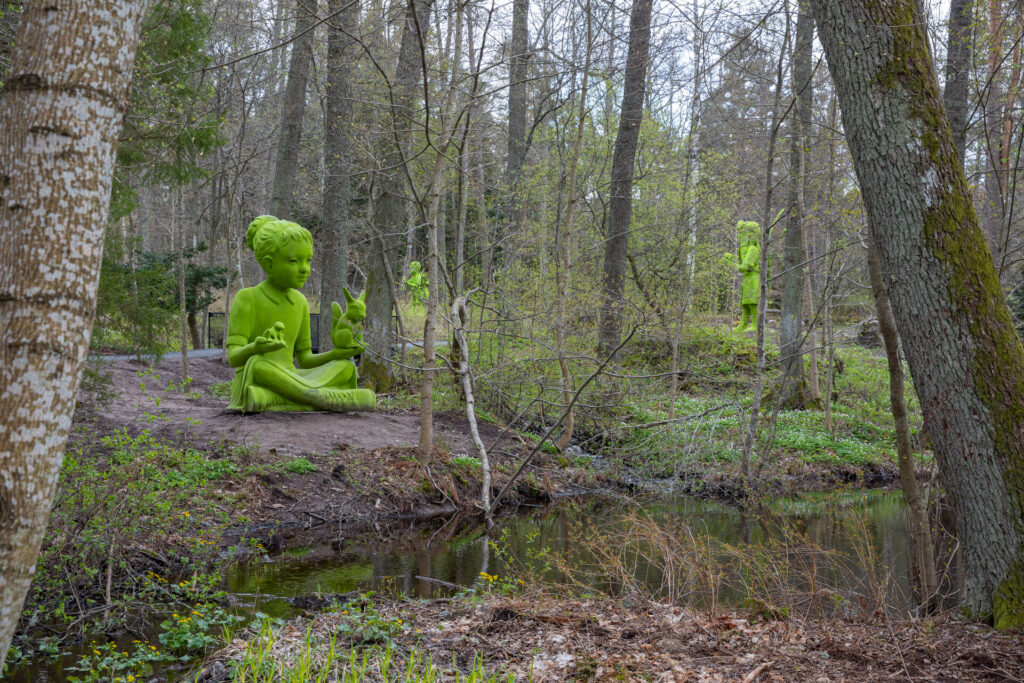
Four huge, bright green figures have taken root in the forest on Örudden here in Söderlångvik. Read more about the Moss Giants.
Past exhibitions
Moss Giants & Waking dreams and other stories
May 2nd – December 14th 2025
Preparations for the exhibition began in 2023, when a suitable forest was sought for the four giant moss children to settle in after being displayed in the city centre of Lille in France during its art festival in 2022. After spending a summer in Helsinki’s Lasipalatsi Square, they have finally returned to their natural habitat, where they remain and, in time, become covered with real moss. Overjoyed to see the forest again, they sing their song four times a day: at sunrise, noon, 3 p.m. and sunset. The wondrously peculiar music is composed by Perttu Haapanen. Read more about the Moss Giants.
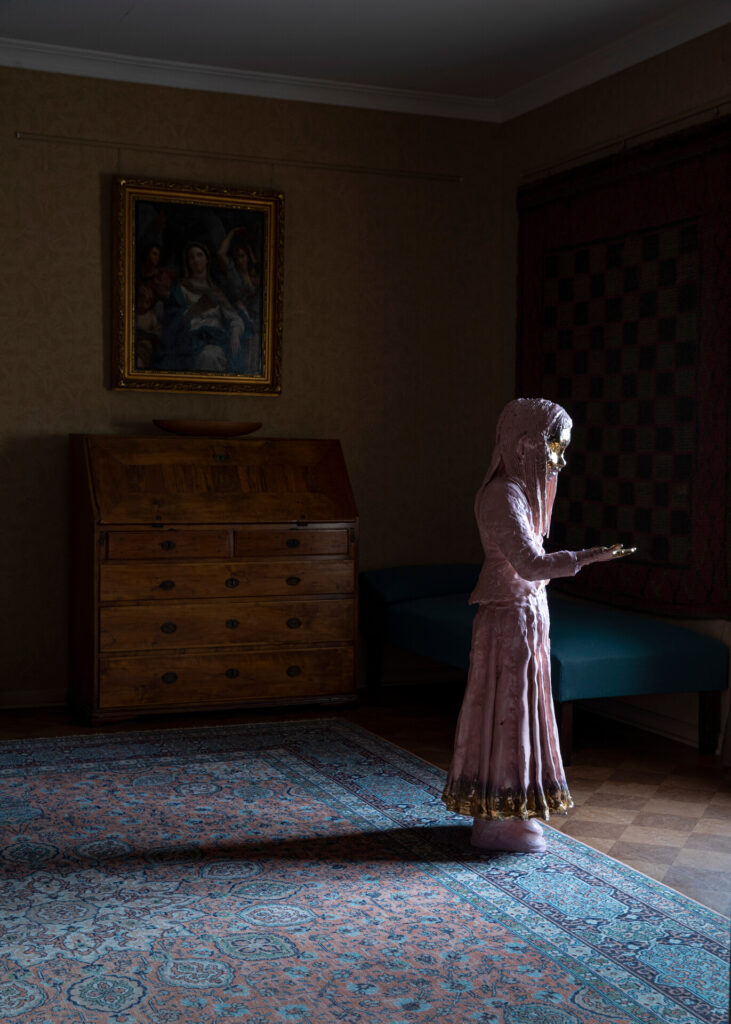
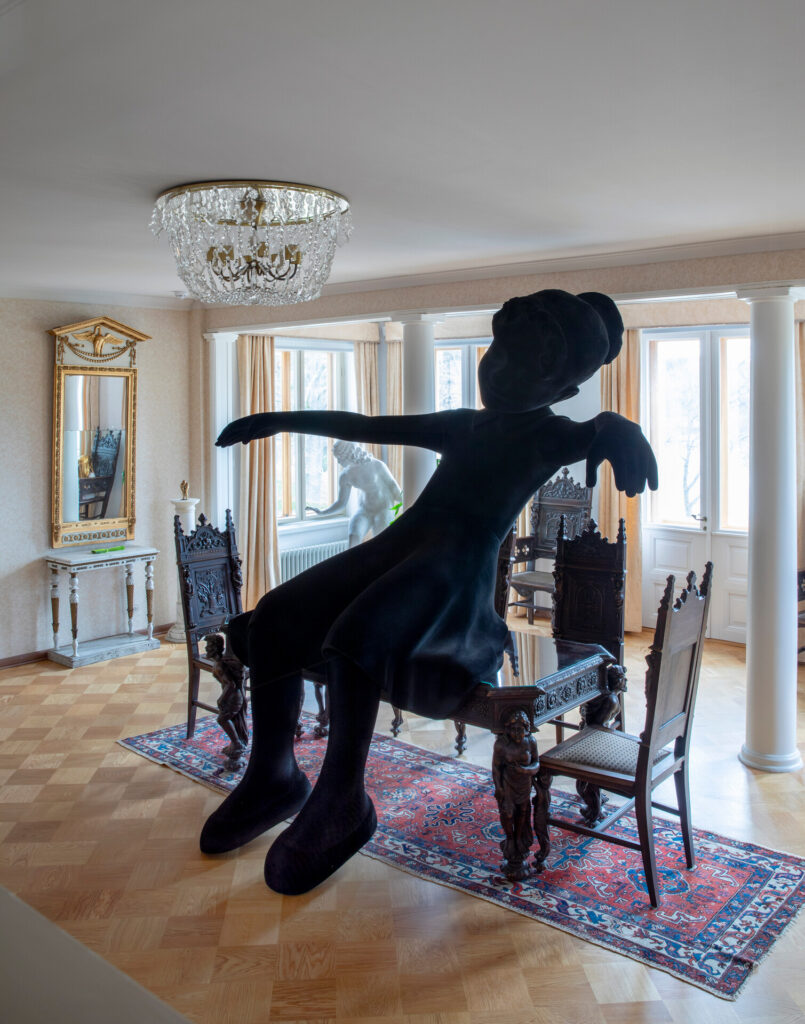
As you entered the museum, you were greeted by a pitch-black slumbering giant named Waking Dream, seated atop an old Gothic table. She set the tone for how effortlessly the many sculptures found their place in the manor’s various halls and rooms. The artist has created small stories for every piece, where a child’s gaze, imagination and our relationship with nature are often the key themes.
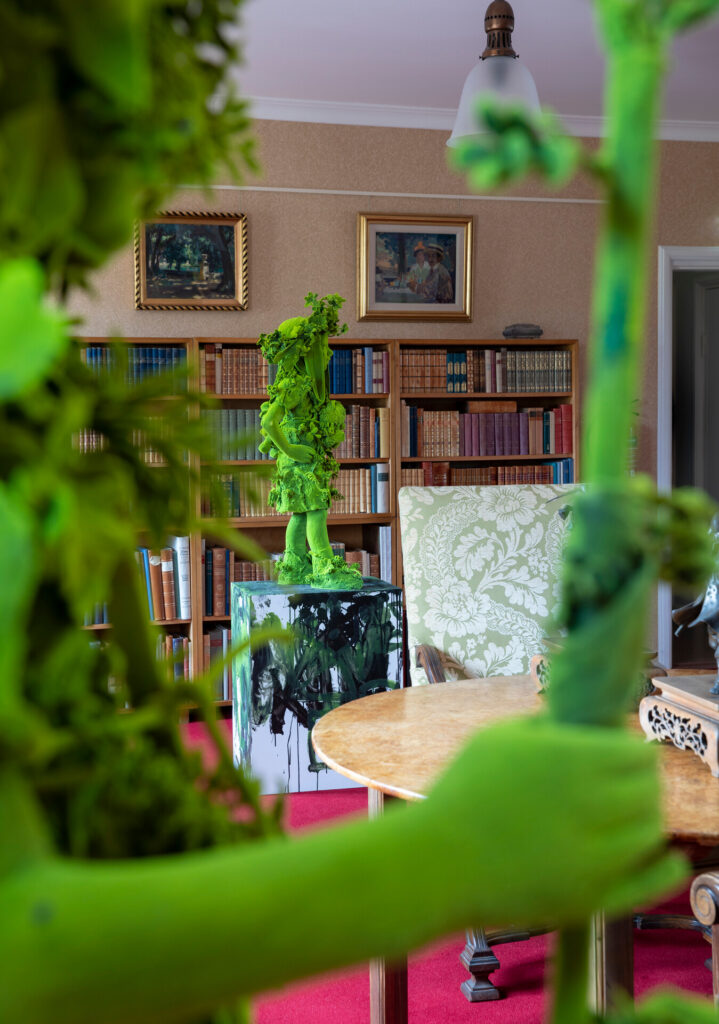
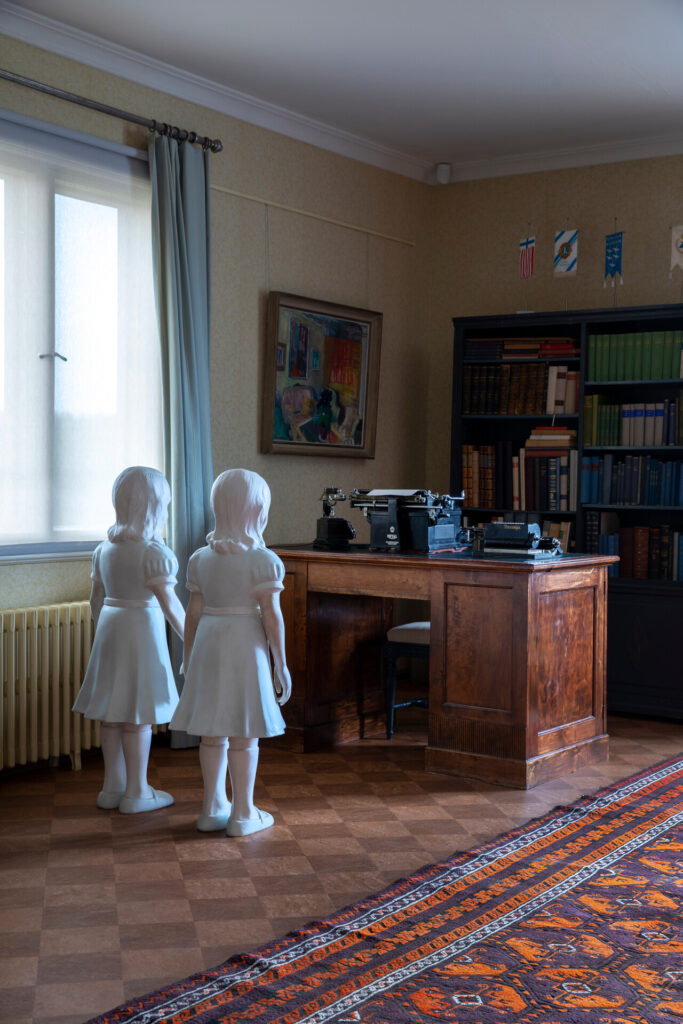
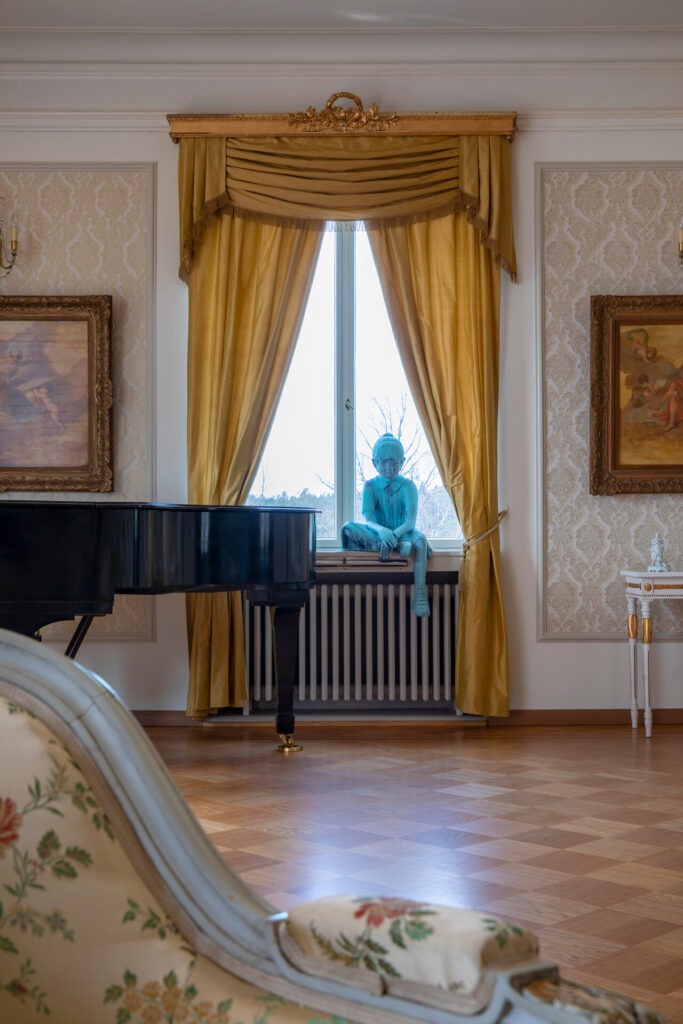
Children and animals have long been central to Kim Simonsson’s work, and this exhibition is no exception. Most of the sculptures depicts children exploring the manor on their own terms: some cutting their hair, some finding hideaways beneath a pool table or in a nest made of cabbage leaves, while others have settled onto a bed or perched themselves on a mantelpiece.
Many of them seemed tailor-made for the atmosphere at Söderlångvik Museum, with gilded and bronze-like surfaces or aesthetics inspired by ancient Rome. Others stood out as striking, bright green contrasts or shifted the mood of the rooms around them. The dining room took on a slightly ominous feel with the matte black silhouette-like sculptures lined up on its long table, and the four children in the chauffeur’s room created a rather eerie presence with their pitch-black stares.

Exhibition in the restaurant
Jussi Tiainen at Amos Krog
Jussi Tiainen (b. 1954) is best known as a distinguished architectural photographer. In the mid-2010s, he documented interiors in the premises of the former Amos Anderson Art Museum in Helsinki. The result was 36 photographs, exhibited at the Amos Anderson Art Museum in 2015, which the artist later donated to Konstsamfundet, where they became part of its collections.
Jussi Tiainen observes the building from surprising angles and captures fascinating details, from the basement to the attic. Like a puzzle, the photographs build a comprehensive picture of the many worlds and historical layers contained within a single building. The curve of a handrail, empty halls, and bricks laid in the wrong direction emerge from the shadows of the artworks. In some images, the precise white grid of a large skylight is interrupted by a row of lamps, while elsewhere the color of an antique mirror frame is echoed in the golden pattern of wallpaper. These highly abstract photographs, approaching the expression of painting, may take time to interpret: everyday details suddenly appear entirely different—strange and yet universal.
The building at Georgsgatan 27, originally designed for Amos Anderson by architects W.G. Palmqvist and Einar Sjöström, was completed in 1913. Since then, it has served as the setting for many different kinds of activities. After 52 years of operation, the Amos Anderson Art Museum closed in 2017, and the new Amos Rex museum opened in a nearby block in 2018. Today, the building houses the Amos Anderson Home Museum as well as a number of tenants.
At Amos Krog, seven works from Jussi Tiainen’s atmospheric series are on display.


Jussi Tiainen
Untitled
Photo
Amos Anderson Fund collections/Amos Rex