Park & Vegetation
The parks history
Söderlångvik Park was designed in 1938 by the landscape architect Paul Olsson (1890–1973), one of the most influential figures in Finnish garden design. During his long career, he designed several of Finland’s most renowned gardens, including the park at Gullranda. Through his work, he helped introduce formal gardens inspired by German and English garden styles in Finland.
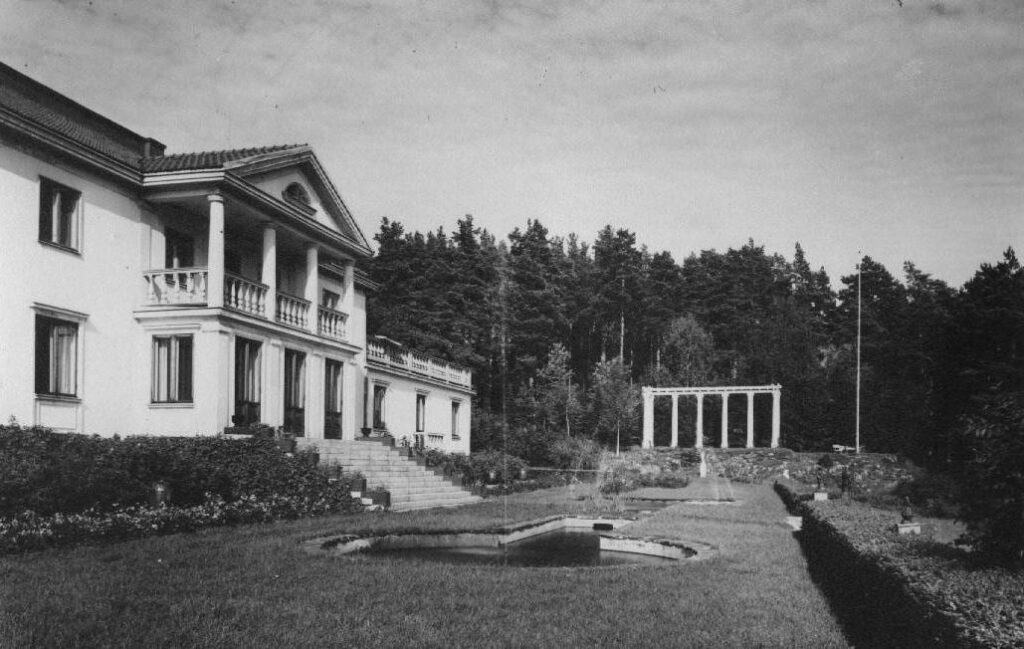
When Söderlångvik Park was created, Amos Anderson himself also had a strong influence on its design. His interest in classical antiquity and fascination with Italy are reflected in the park’s layout and details. Together, Anderson and Olsson created a park where architecture, art, and nature form a harmonious and beautiful whole.
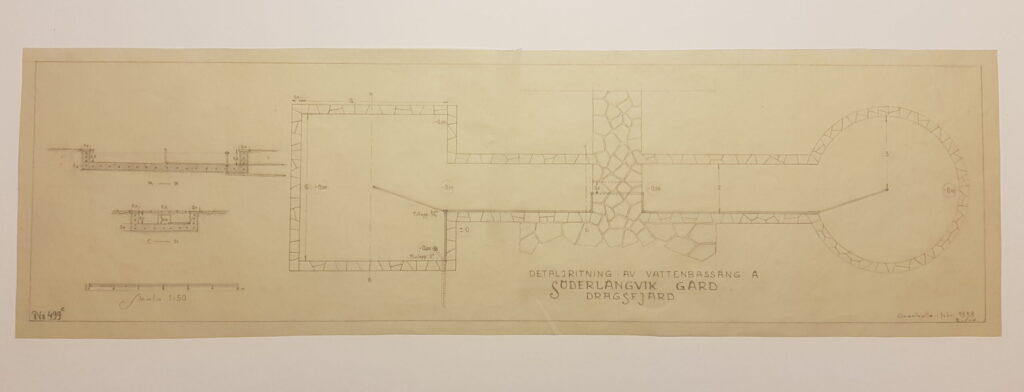
Over the years, the park has undergone many changes and developments, but the ambition has always been to preserve the essential features of Paul Olsson’s original design. In 2020, the park underwent an extensive restoration with the help of landscape planner Victoria Hagman of Viva Garden. New plantations were established based on the original drawings, helping to highlight the park’s historical character and cultural heritage once again.
The park around the main building
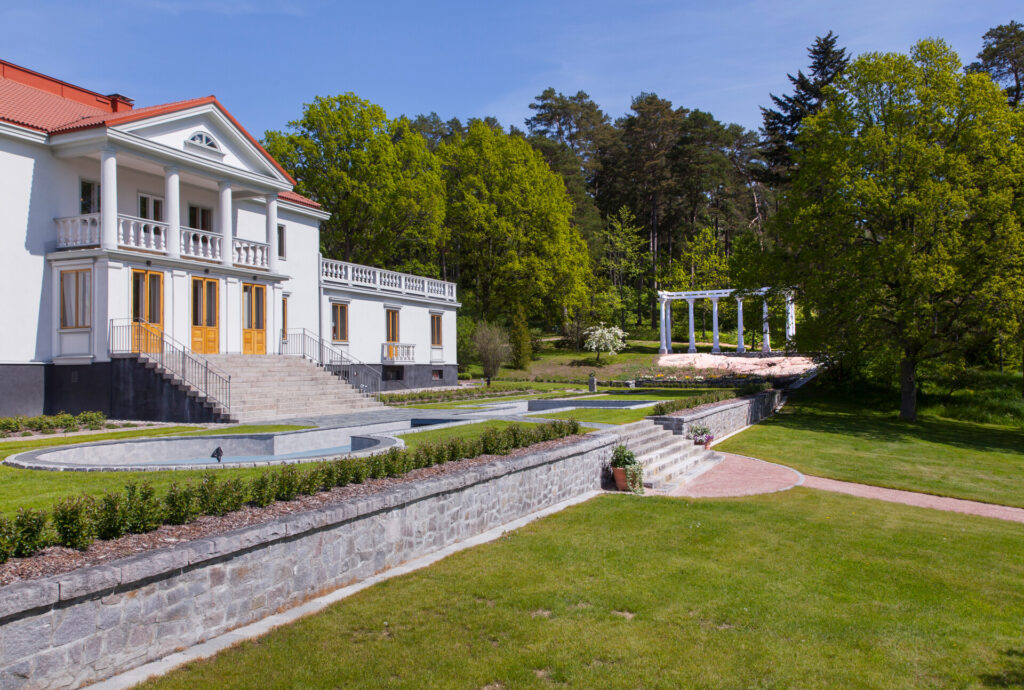
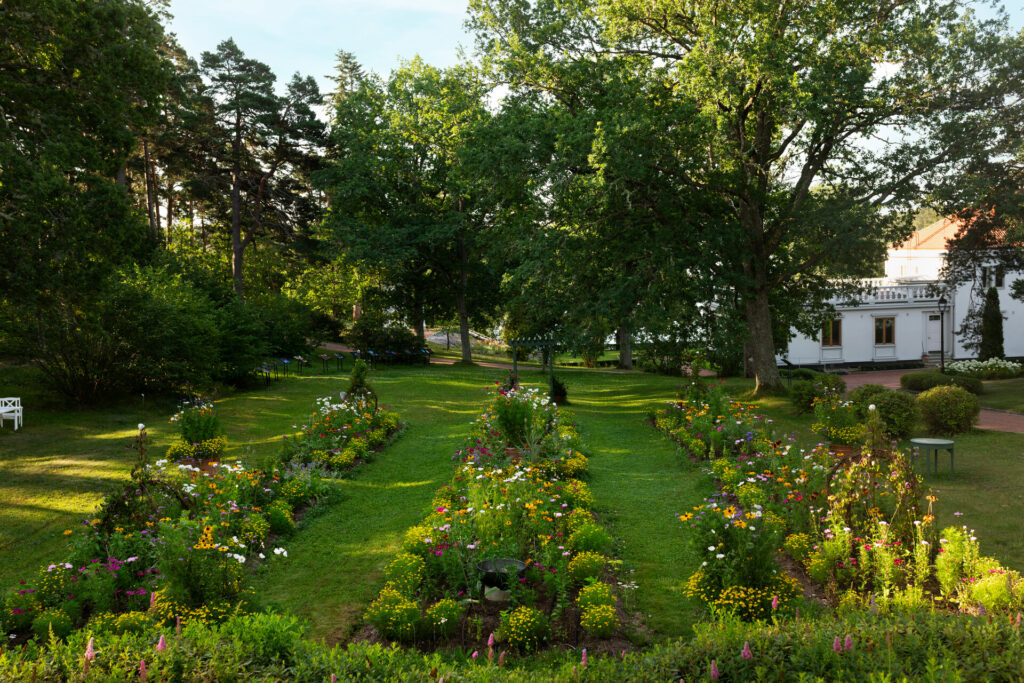
The park closest to Söderlångvik Manor’s main building is inspired by Italy and characterized by symmetry, long sightlines, and architectural details. One of its most distinctive features is the fountain “The Key”, named after the Key of Saint Peter and created according to Amos Anderson’s own wishes. The area is also home to the elegant colonnade, which consists of replicas of the original columns.
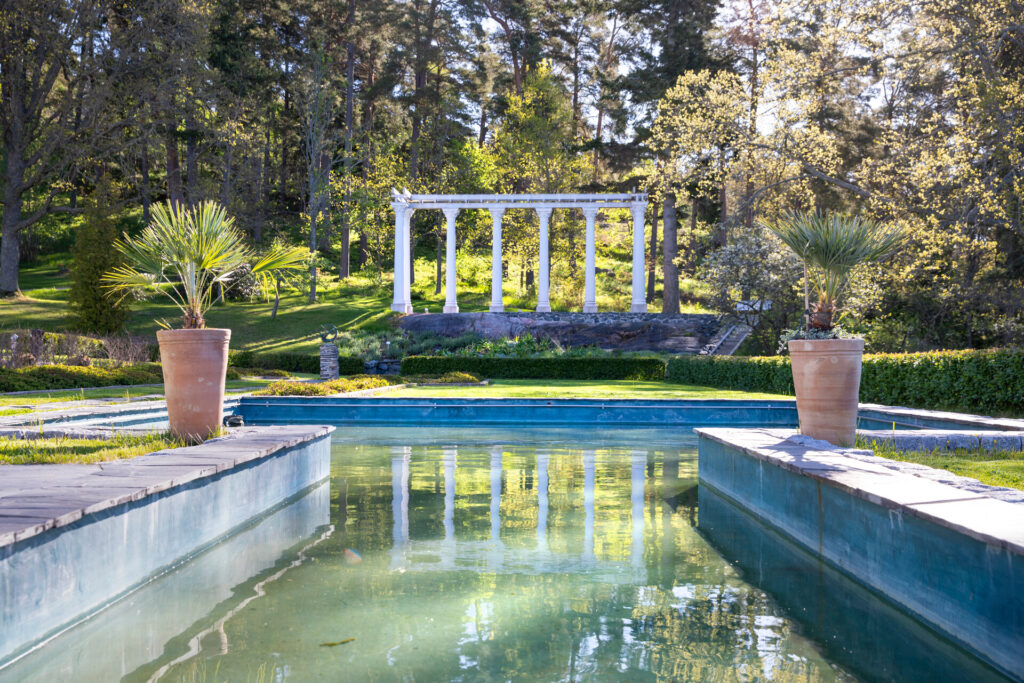
The flower beds are bordered by low, neatly clipped hedges and surrounded by well-maintained lawns. Paths of slate and red gravel guide visitors through the park. Near “The Key”, large pots filled with Mediterranean plants such as agapanthus, palms, and cordylines enhance the Southern European atmosphere.
The park is framed by magnificent oaks, pines, and other mature trees that were planted in the early 20th century. The large lawn also features trees planted over the years by guests of Amos Anderson. Closer to the shoreline, several old elm trees can be found, while the forest edges are adorned with rhododendrons, azaleas, and hazel shrubs. Much of the vegetation consists of perennials and woody plants that provide structure and character to the park throughout the year.
The Plum Garden
The Plum Garden is named after the plum trees that grew here during Amos Anderson’s time. Today, the area has been transformed into a new garden space focused on biodiversity and pollinating insects. Each year, annual flower plantings are established to provide nectar, pollen, and shelter for bees, butterflies, and other important pollinators. Some plants are pre-cultivated from as early as February in Söderlångvik’s own greenhouse, while other fast-growing species are sown directly in spring.
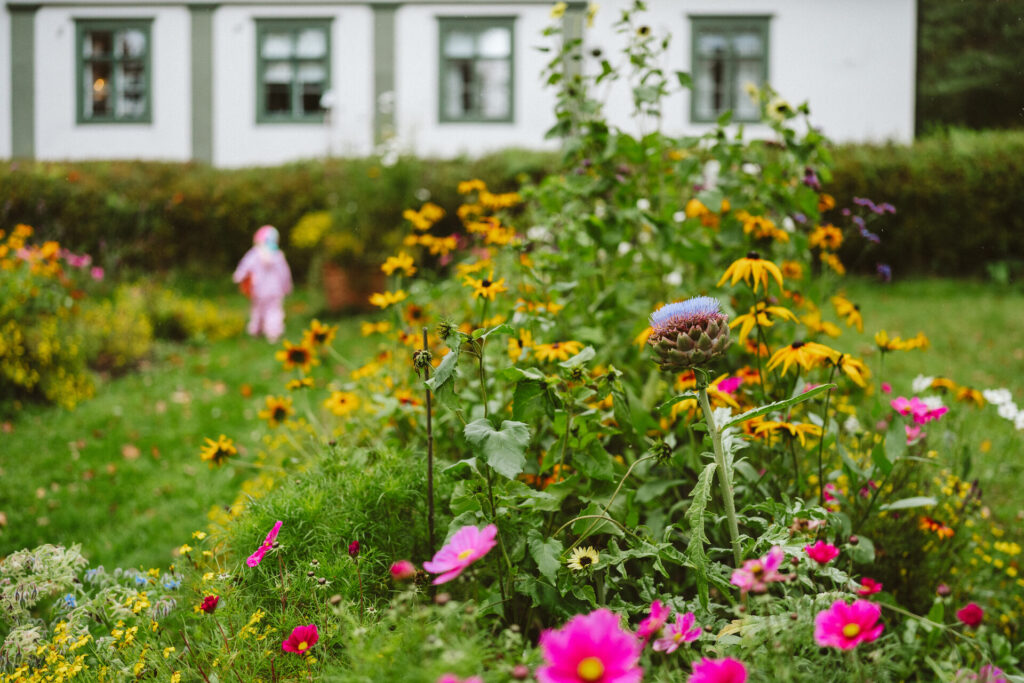
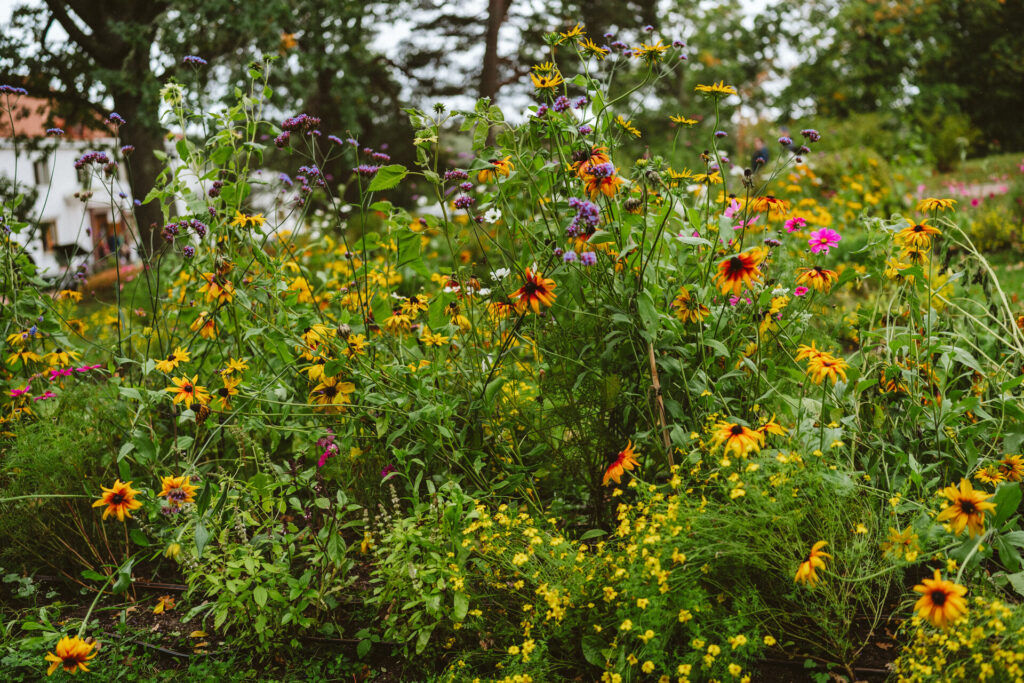
To create good conditions for both plants and soil, mulching is used throughout the garden. This enriches the soil’s microbial life and helps retain moisture and nutrients. The area is managed with respect for natural processes, and some parts of the plantings are allowed to develop freely. Certain wild plants are also encouraged to grow here, further supporting biodiversity.
The Plum Garden changes continuously throughout the growing season. In early summer, fresh greenery dominates the landscape, while late summer brings a vibrant display of colourful blooms. This garden space contributes to the biodiversity of Söderlångvik Museum Park and offers visitors new experiences throughout the growing season.
The Maiden Dance and Glassgaraget
Around Glassgaraget, edible plants, flowers, and Mediterranean herbs are grown in pots and planting beds, including violas, pelargoniums, and various culinary herbs. Part of the harvest is used in Glassgaraget’s own food products, providing locally grown ingredients for the café’s offerings.
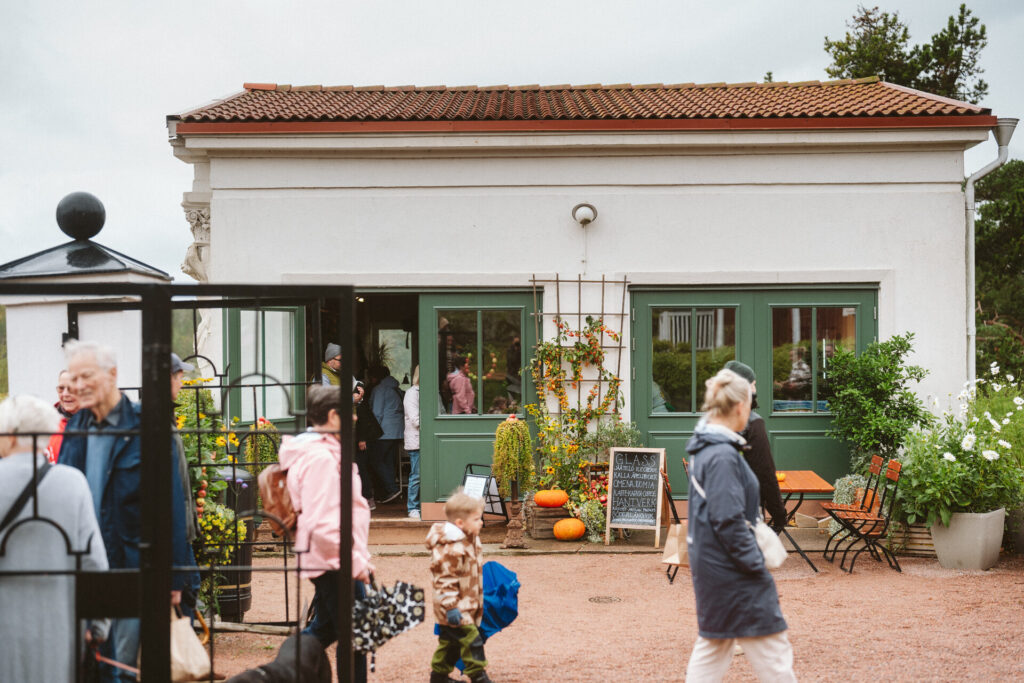
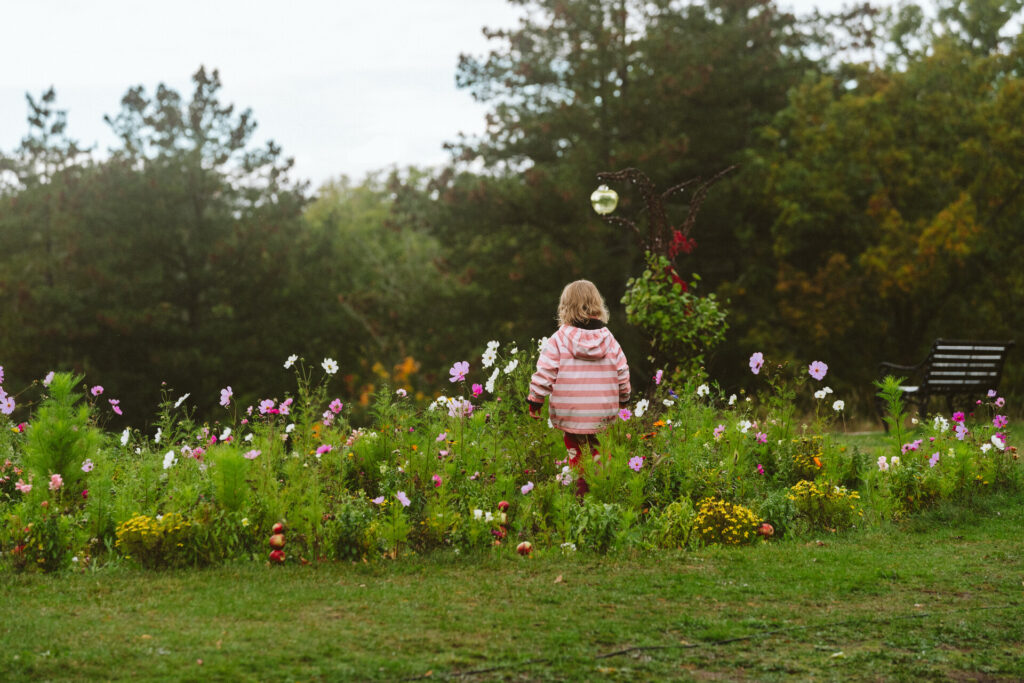
Next to Glassgaraget is “The Maiden Dance” (Jungfrudansen), a labyrinth-shaped flower bed originally created as an Apple Day art installation. Over time, it has become a valued part of the park’s vegetation. Early in spring, the bed is filled with flowering bulbs, while later in the season it bursts into colour with summer flowers. The Maiden Dance is not only a decorative feature of the park but also provides an important habitat for pollinating insects.
The Apple Orchard
Söderlångvik’s apple orchards have a unique history dating back to the years following the Second World War. In 1947, there was a need for land to provide homes for Karelian refugees settling in the area. The area around Långviken had been designated for a fishing village for Karelians, but Amos Anderson, who had recently settled at Söderlångvik, did not wish to part with his land. Instead, he established fruit orchards there, allowing him to retain the property at Långviken as a unified estate. As compensation, land from other parts of the manor’s holdings on Kimitoön was transferred.
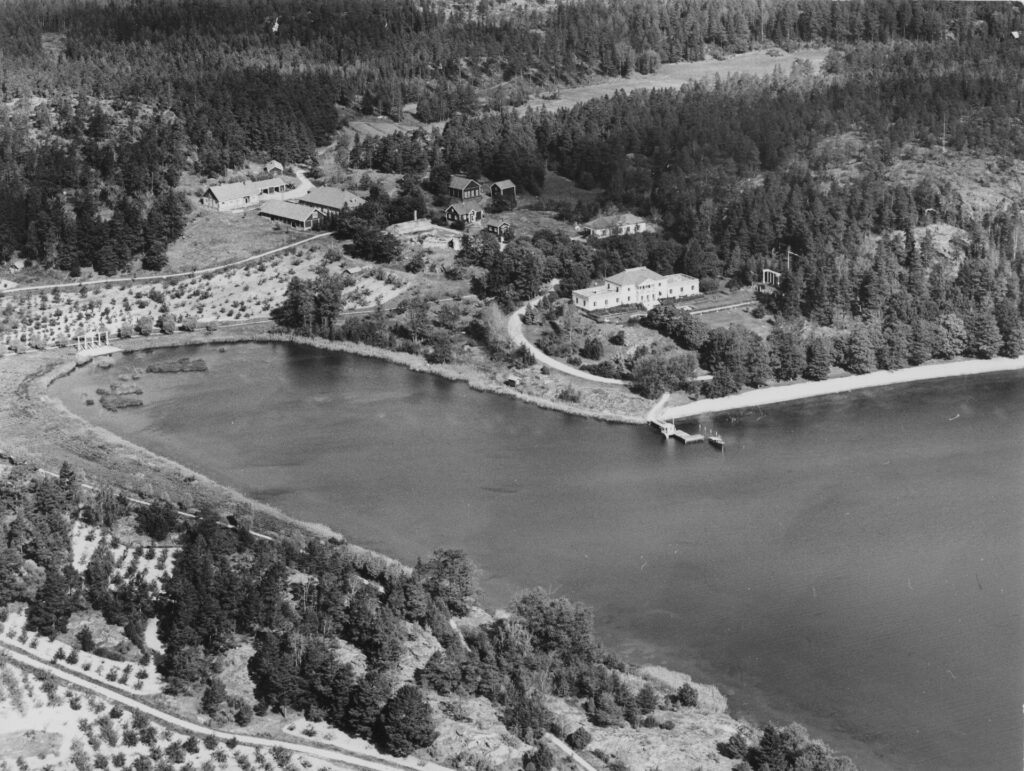
The first apple trees were planted 8–10 metres apart, which at the time met the requirements for specialized fruit cultivation. To make use of the land between the trees, potatoes and vegetables were also grown there, something that was particularly important during the food shortages of the post-war years.
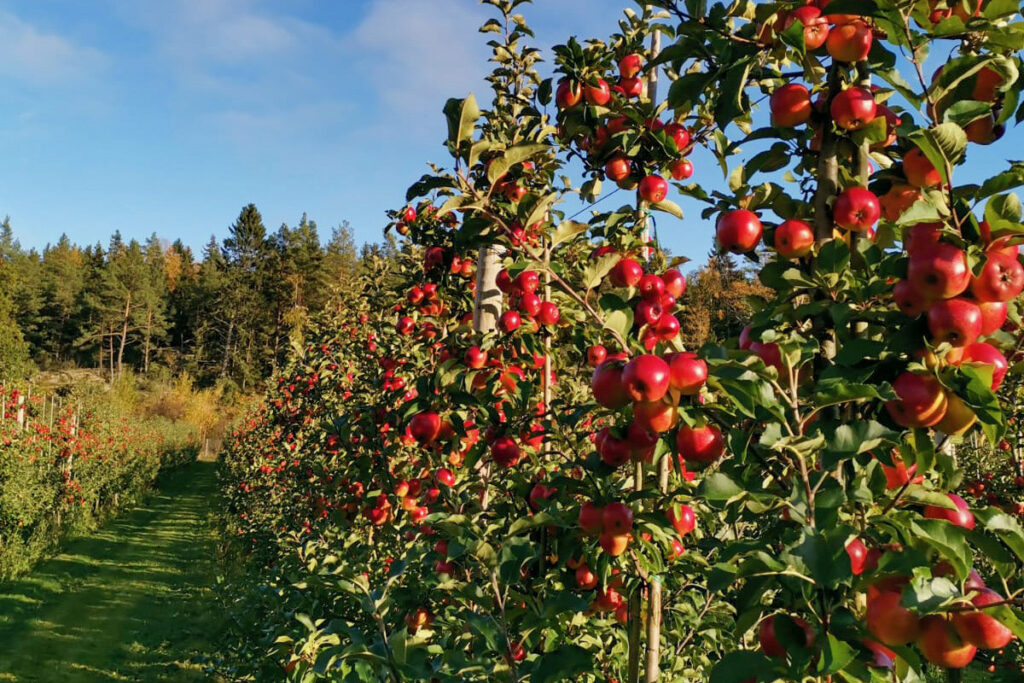
In the oldest parts of the orchard, apple trees of the Red Cinnamon and Yellow Cinnamon varieties still grow today. Over time, these historic plantings have become a natural part of the park landscape, and visitors are welcome to stroll among the trees and enjoy the blossoms in spring and the colourful fruit displays in autumn.
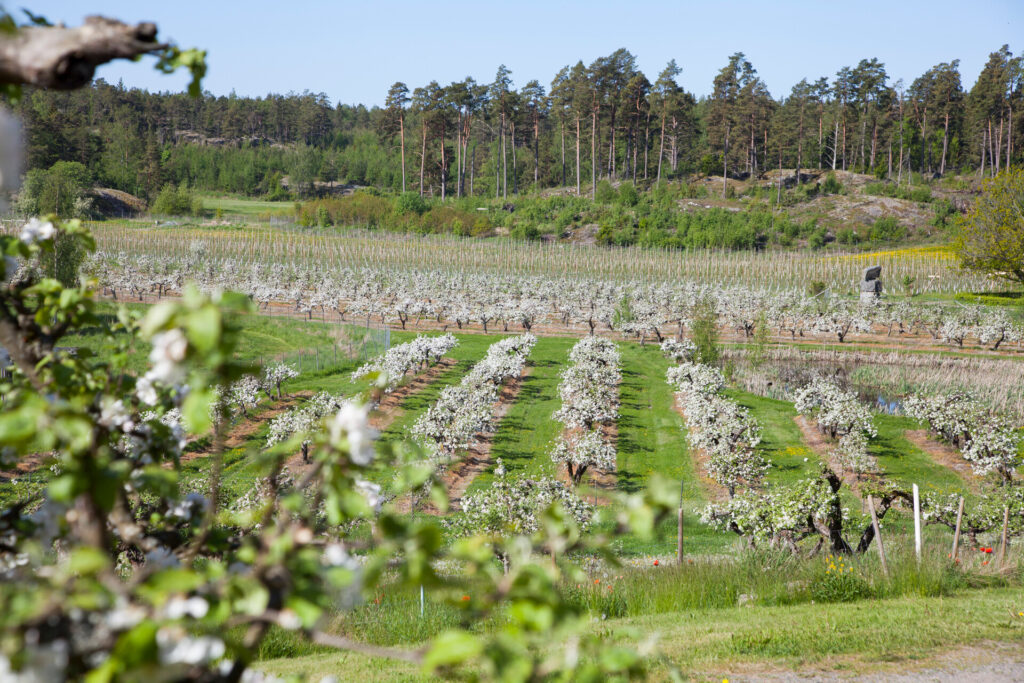
The modern production orchards at Långviken look quite different today. Here, apple trees are grown using modern cultivation methods, planted closely together and trained on trellises. The orchards are fenced and equipped with drip irrigation systems to ensure high yields and efficient management. The branches are kept short to facilitate both pruning and harvesting.
Today, Söderlångvik’s apple orchards comprise approximately 38,000 apple trees. The majority of the orchards are located at Tolfsnäs in northern Kimitoön, while the apple trees around Söderlångvik continue to form an important part of the manor’s cultural landscape and identity.
The P1 Parking Area
The P1 parking area was established in 2023 to accommodate the growing number of visitors to Söderlångvik Manor. The area has been carefully designed to blend into the surrounding park and natural landscape while providing visitors with a welcoming first impression of the estate.
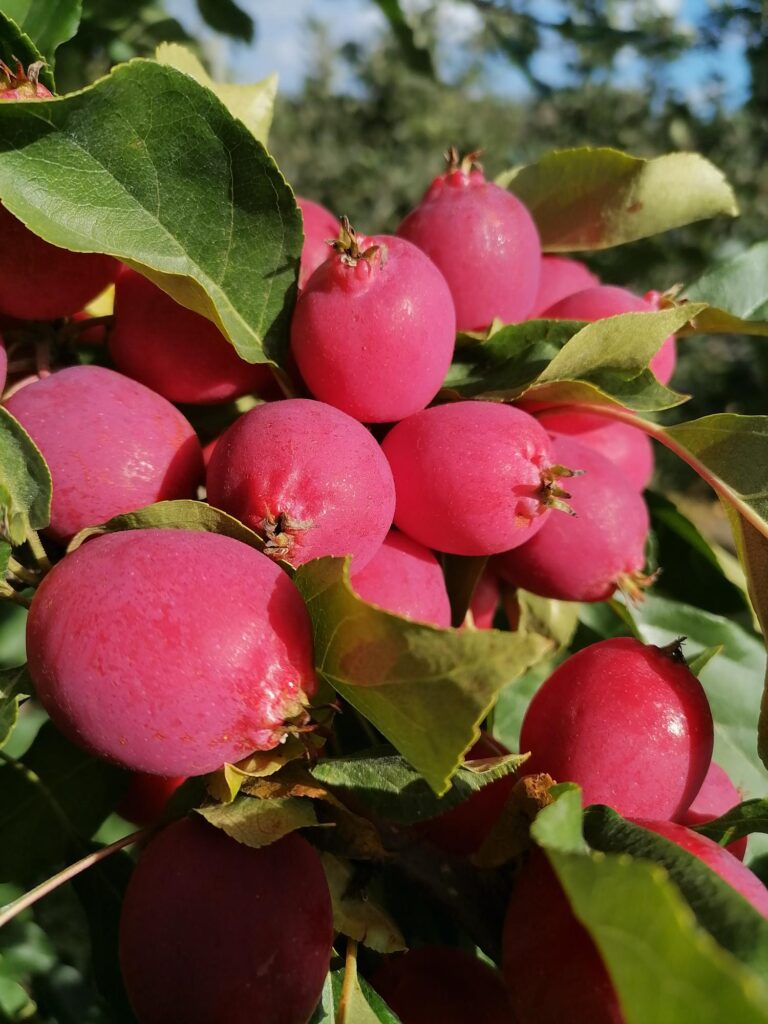
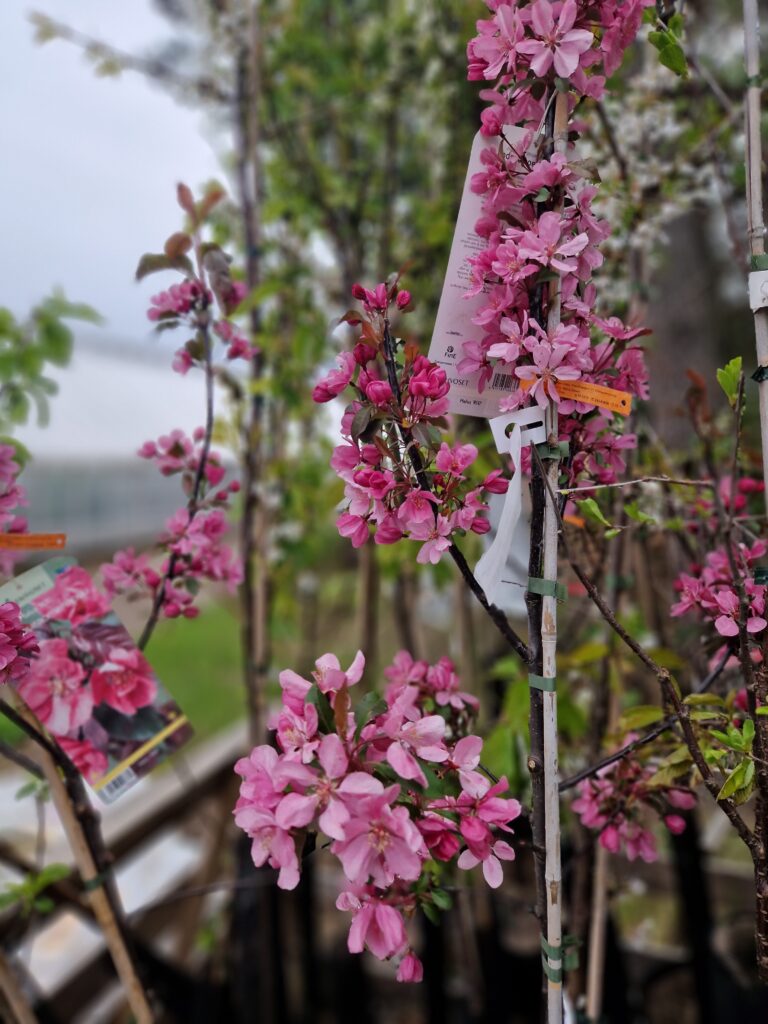
Dozens of ornamental apple trees and several cherry trees were planted along the parking area, offering abundant blossoms in spring and beautiful colours later in the season. The parking sections are separated by hedges of Japanese spiraea, creating a pleasant green environment. The surrounding area is managed with care to preserve its natural archipelago character and ensure a smooth transition between the landscaped park and the surrounding landscape.