LUX Söderlångvik 2026 artist : Simon Heijdens
3.11.2026
Biography
Simon Heijdens
(b. Breda, The Netherlands, 1978)
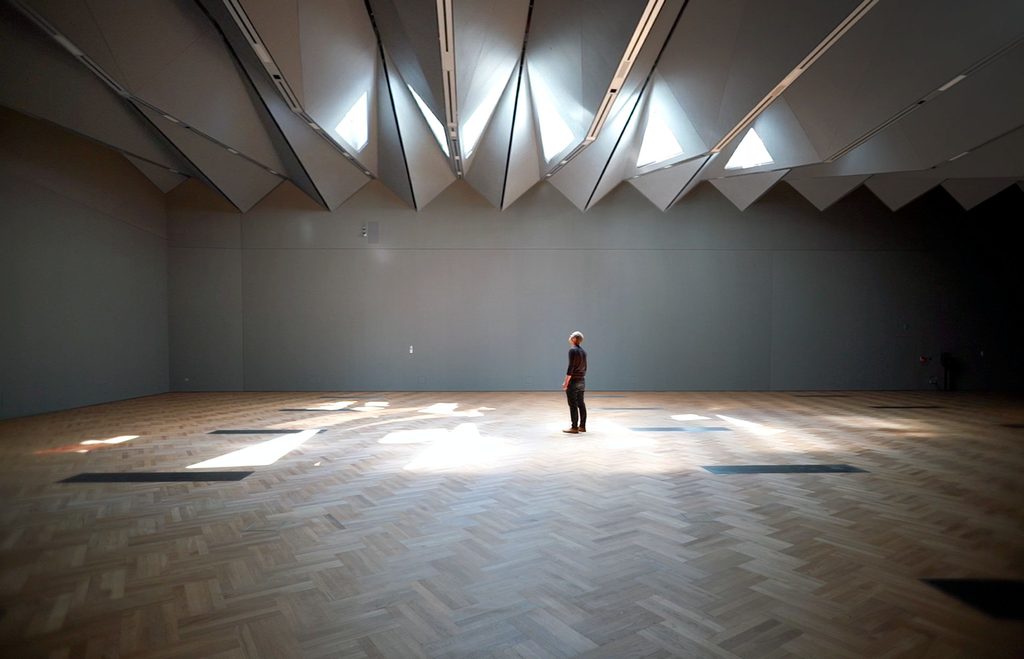
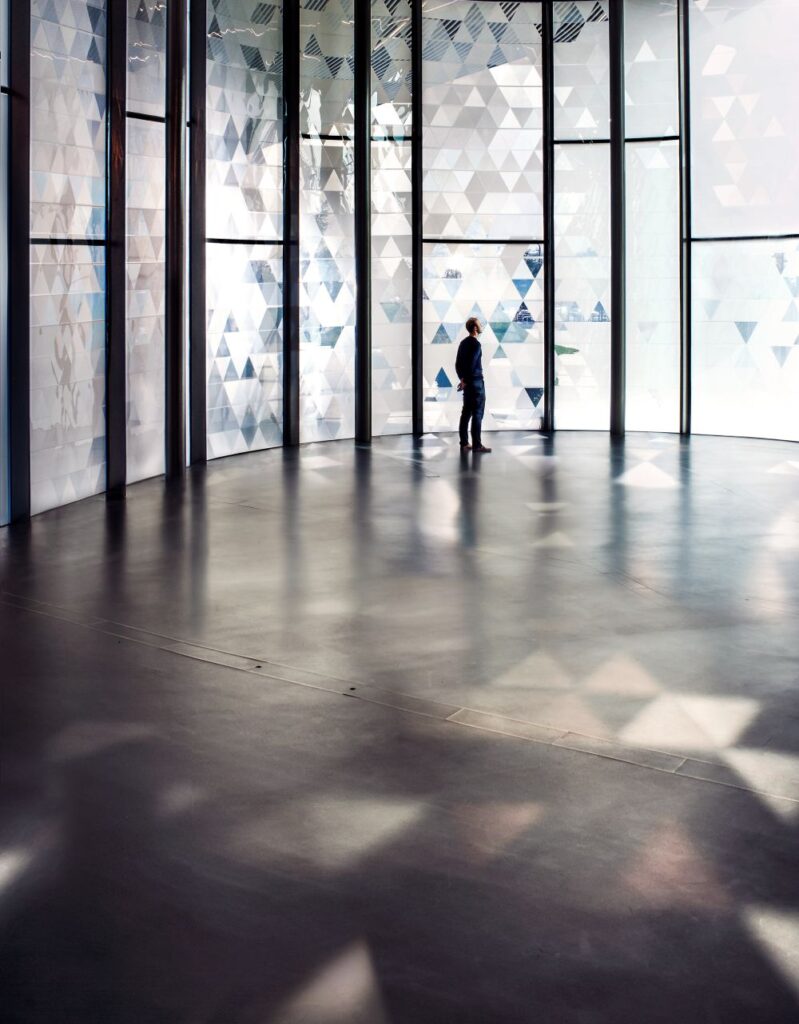
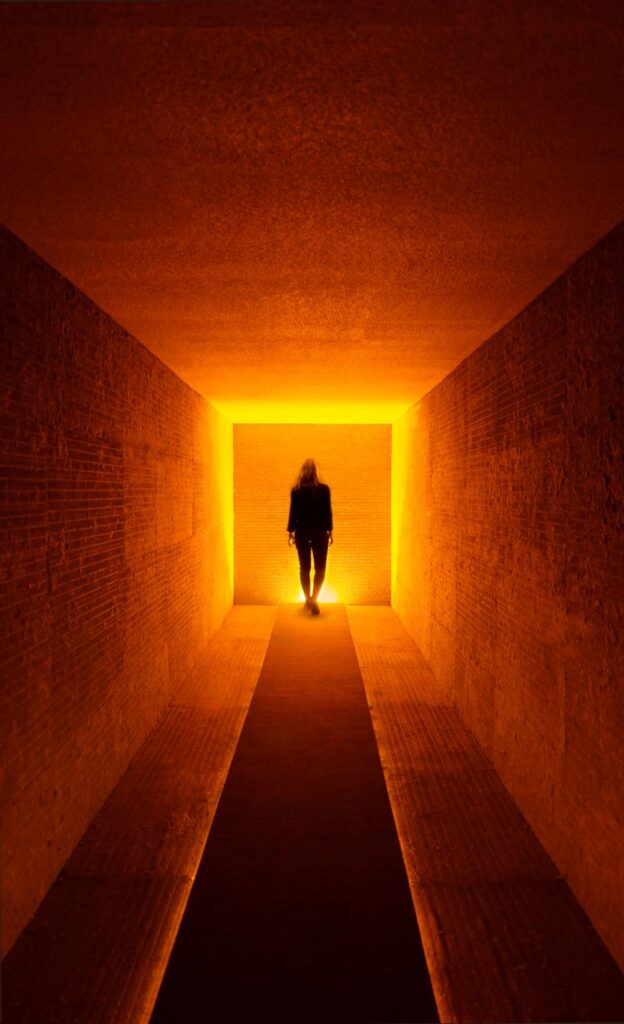
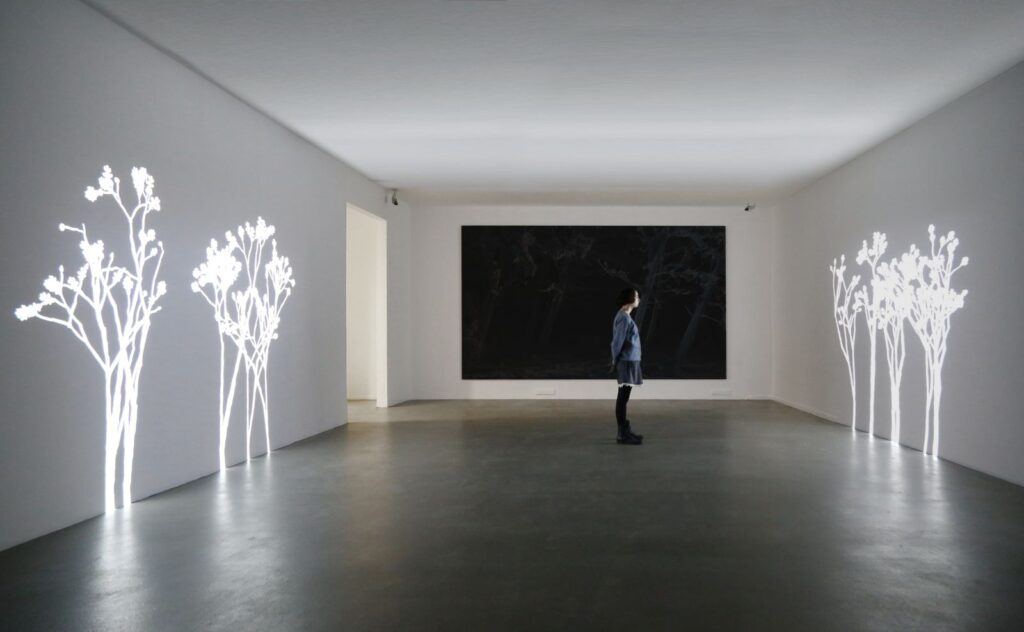
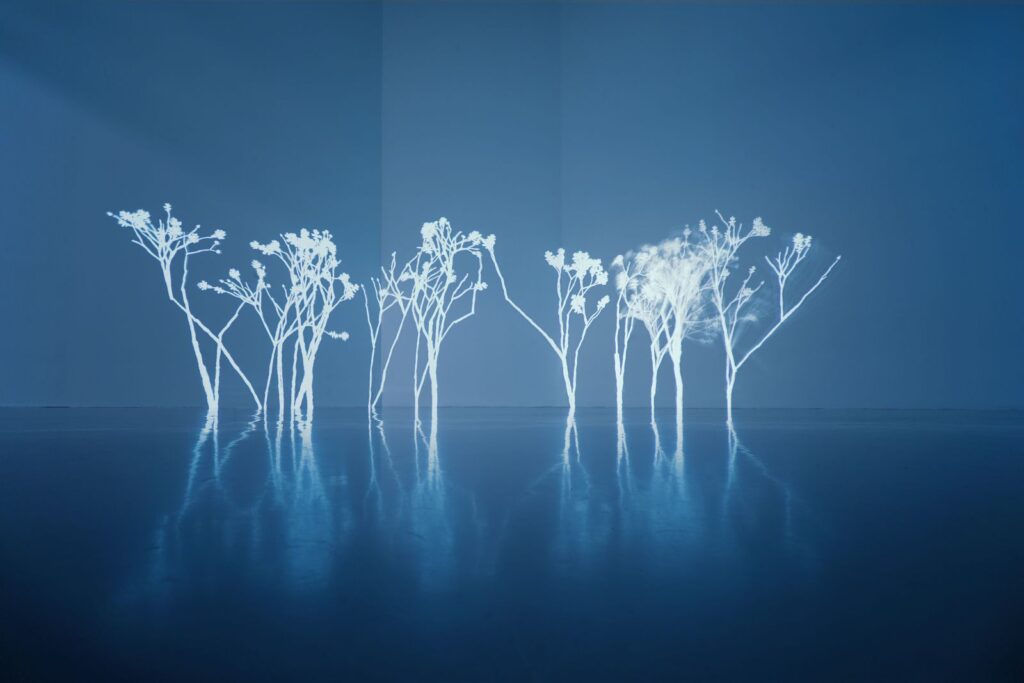
Simon Heijdens’ installations explore the remnants of nature in contemporary life. In his studio based practice he creates unique handmade materials and technologies that use these remnant natural processes, to together form living mechanisms that reveal the hidden essence of a place.
His works are never static. Affected by environmental conditions such as sunlight, wind, and unintentional human interaction, the artworks constantly transform in real time, to create ever-changing forms and narratives.
While technically complex, his installations are understated and poetic in appearance, seamlessly integrated into their environment. A graceful juxtaposition of neglected natural processes and intricate technology, these works evolve almost organically into a new kind of nature within urban settings, questioning the importance of nature and coincidence in an increasingly planned world, and offering moments of inquiry and contemplation.
Heijdens’ work is featured in permanent collections such as MoMA New York, the Art Institute of Chicago, the Victoria & Albert Museum London, Fonds National d’Art Contemporain France, Hong Kong City Collection, IMJ Jerusalem, Boijmans Museum Rotterdam and Centraal Museum Utrecht, and have been exhibited in leading museums such as Stedelijk Museum Amsterdam, Garage Museum of Contemporary Art Moscow, and Haus der Kunst Munich.
Notable commissions include ‘Shade’ at The Art Institute Chicago in 2010 and the V&A London in 2017, the Perrier Jouët commission for Art Basel Miami, ‘Tree’ and ‘Silent Room’ at SXSW, and ‘Lightweeds’ for the Royal State Visit of Their Majesties King Willem-Alexander and Queen Máxima of the Netherlands to the US in 2015 and to the UK in 2018. He is based in London and represented by Superblue.
Reading distance
Simon Heijdens
Curated by Irene Campolmi
LUX Söderlångvik
November 21, 2026 – December 19, 2026
Reading distance is Simon Heijdens’ latest large-scale light artwork, developed for LUX
Söderlångvik and curated by Irene Campolmi, Curator for Art, Technology and Society at
Amos Rex.
How do landscapes speak to us? What language do they communicate to us? Can we even grasp – or understand – it with our human senses?
Reading distance invites us to observe, listen and seek for the meaning of place in the
environment surrounding us. The work takes its title from the terminology of information
design, where reading distance refers to the distance from which a viewer can read and
understand a text. Yet, the title turns this terminology into a verb, inviting viewers to read
the distance in the landscape before them. Reading becomes an investigation for clues,
leaving viewers with the task of meticulously looking into the distance in search of
information. Treetops become glyphs, waves become storylines, clouds become
exclamation marks.
The work consists of a series of floating beams of light installed on the water, visible from
the shores facing the Renaissance-inspired villa. The beams bend poetically with the
movement of the water and its waves, creating a mesmerising flickering effect through
which light reveals something that would otherwise remain almost invisible and
imperceptible: the subtle, continuous movement of the water’s surface. In doing so, the
installation enhances the surrounding landscape of Söderlångvik, illuminating its natural
rhythms without imposing a fixed image upon them. The landscape itself becomes an
active part of the artwork, as the movement of the water continuously transforms the
appearance of the light. The beams are positioned according to a geodesic grid, a
geometric pattern made up of interconnected shapes that is often used in scientific
models to simulate oceans, weather and climate.
Here, the grid connects the lights across the water, and the light emitted by each beam
seems to trace a direct line between the beam and the stars in the night sky. The
installation thus creates a poetic correspondence between the water and the cosmos,
bringing the vastness of the universe into dialogue with the intimate landscape of
Söderlångvik.
It seems almost obvious that nature communicates with us, yet human beings struggle to
decipher other-than-human forms of communication, challenging the limits of human
perception and our ability to understand languages and signs beyond written words.
Reading distance invites us to experience an embodied form of knowledge in which light,
the medium through which the universe is made visible, gives us signals of distant entities
which we can hardly read or fully understand, reminding us that seeing something does not
imply understanding it. Light reminds us of the limits of human perception: in the universe,
regions from which light cannot reach us remain invisible and beyond our capacity to
affect or interact with them.
For this reason, Reading distance is a work that reflects on humanity’s enduring
fascination with distant lights, both as life-saving navigational tools and as metaphors for
hope, orientation and the possibility of something beyond what we can immediately
perceive. At sea, the ability to read distances enables sailors to navigate vast expanses of
water with few visual references, relying instead on an attentive perception of their
surroundings and an understanding of their position in space. Reading the distant light of a lighthouse signals a point of arrival; reading the light of distant stars aids navigation at sea,
offering coordinates through which to orient ourselves in a dark landscape. Reading the
reflected light of the moon allows our eyes to adjust to darkness and, like animals, to move
through space by relying on senses beyond sight.
At Söderlångvik, these associations converge into an evocative artwork. The floating lights
establish new points of reference across the water, subtly altering how we perceive the
distance between the shore, the surrounding landscape and the night sky. Rather than
simply illuminating the environment, the work invites us to become more attentive to its
existing qualities: the movement of the waves, the changing reflections, the depth of
darkness and the shifting relationship between what is near and what is far away.
Reading distance carries in its title the graphic representation of the distance across
which the human eye searches for something else out there, using a visible space to
separate the two words that make up its title. As the title suggests, Reading distance
reflects on languages beyond the spoken word. This connection can be traced to the Latin
verb legere, meaning ”to gather”, ”to collect” or ”to pick”, from which the English word read
ultimately derives. The act of reading can thus be understood as gathering individual
elements and bringing them together to form meaning.
To read a distance, therefore, means to gather the signals and information offered by our
surroundings, interpreting the positions and relationships of the entities around us to
understand where we ourselves stand—in space as well as in time.
Reading distance invites us to collect the information embedded in the surrounding
landscape—the water, the night sky and the universe that the latter opens up to us—and
translate it into a language through which we might navigate unknown horizons. Through
light, the familiar landscape of Söderlångvik becomes a place of renewed perception,
where the visible and invisible meet, and where observing the world becomes an act of
reading our own place within it.